What a delight it was to be knocked off our seats by Scotland’s recent qualification for the World Cup! Football fans or not, all were dazzled by Scotland’s four winning goals against the formidable Denmark, from McTominay’s stunning bicycle kick just four minutes into the match up to the last minute daring strike from well-behind the half-way line powering its way past the keeper. As a BBC headline admittedly put it: “Scotland shook the earth”, literally! For all Scotland lovers like us it was hard not to get caught up in the unbridled joy across many Scottish cities, and we proudly celebrate that Scotland will take its place alongside other nations in the World Cup competition next year.
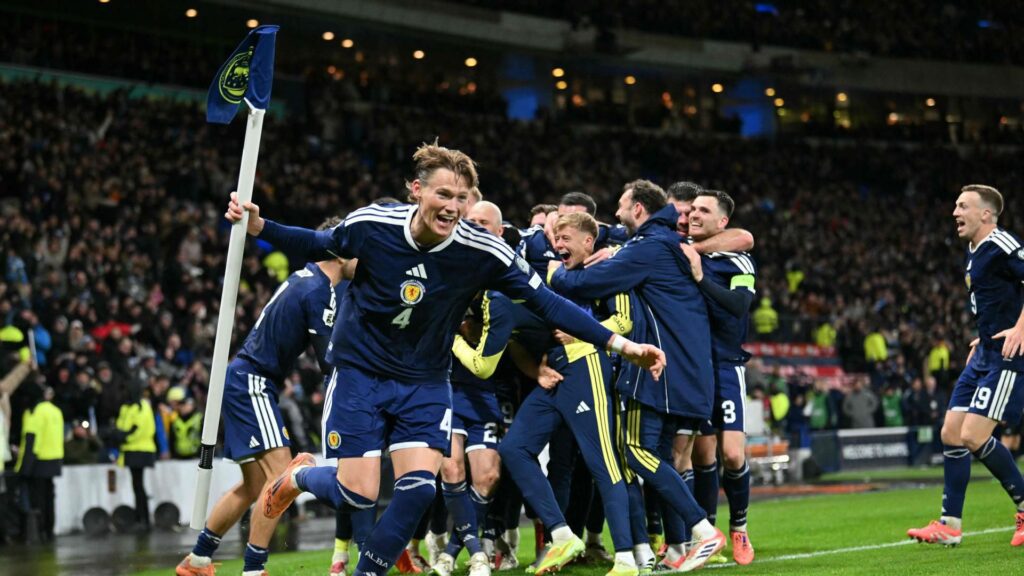
Scottish players celebrating returning to the football world cup finals after 28 years
In a competition of another kind, several legends vie to explain the origin of Scotland’s celebration of St. Andrew’s Day, this November 30th. For those with the patience to wait until Tuesday, you may wish to attend the Johannes Gutenberg University Mainz “Reading Scotland” online seminar with Dr. Margaret Bennett on the origins of Scotland’s national holiday which can be watched on the series Youtube channel.
Here we will favour the version where in 832, Óengus (Angus MacFergus) II, king of the Picts and Scots, appealed to Saint Andrew at Athelstaneford to spare his army, largely outnumbered, from a seemingly lost cause battle with the Angles. A cross in the form of St. Andrew’s crucifixion appeared in white cloud formation against the blue sky, filling the Scots with courage, enabling them to summon valour and strength, vanquish the invaders, and hearten a burgeoning nation.
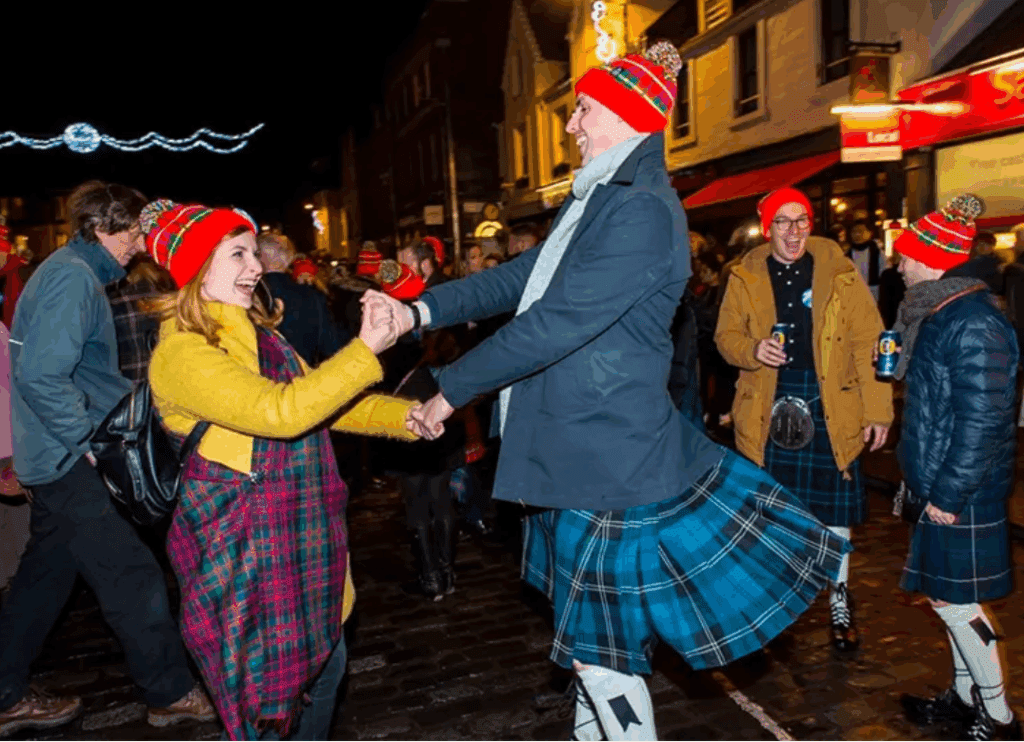
Scots joyfully celebrating St. Andrew’s day
The Saltire this legend evokes is recognized the world over as emblematic of this sturdy courage of the Scottish spirit, endlessly repeated in back-from-the brink memes. Think of Andy Murray’s thrawn roller-coaster tenacity, think of Mad Piper Bill Millin marching through bullets on Sword beach at Normandy, or the most naked and subversive power of Burns’s affirmation of humanity, “The honest man, tho’ e’er sae poor/ Is king o’ men for a’ that”.
In counterpoint to such iconic beats informing our romanticized view of Scottish identity is the future the real Scotland must imagine and craft for itself. As Europeans, we cannot but be mindful of the very real challenges that Scotland faces and stand with it as it does so. We cannot overlook how Scots today – despite the sway held over their own resources and economy, despite having been wrenched from Europe against their will, despite being thwarted on an almost daily basis from expressing their own democratic will – look beyond their own borders and consider how to fashion a destiny of their own choosing.
It cannot be said that Scots lack imagination. Indeed, Scotland will never be too poor to envisage its capacity to forge a better life. The future Scots see for themselves is one where innovation engineers new green industry and growth; where society values and celebrates its rich tapestry of communities; where Scotland is free to engage and collaborate, economically and culturally, with its European neighbours; where Scotland’s voice of humane diplomacy can penetrate, if not attenuate, a cacophony of global disarray.
Even from within Europe, Scotland’s ambitions are visible and, aligned as they are with Europe’s founding values, can inspire Europe in turn to re-imagine its own future.
On this St. Andrew’s Day, then, to Scotland, and perhaps, if it be her wish, to Scotland in Europe … Slàinte Mhath.
In European solidarity,