It has been another turbulent season in British politics: July saw the demise of the PM Keir Starmer and his replacement by Andy Burnham. August brought a series of financial scandals surrounding Nigel Farage. But it was September that brought about what may well be the most significant development of all, with a historic meeting in Cardiff.
On Monday, the First Ministers of Scotland, Wales and Northern Ireland – John Swinney, Rhun ap Iorwerth and Michelle O’Neill – met alongside Sinn Féin president Mary Lou McDonald and signed a memorandum of understanding calling for their nations’ right to determine their own future. By calling for a United Ireland just ahead of the meeting, Trump tried to make the moment all about himself, however this must not detract from its historic natureIt was the first time the leaders of the three devolved nations gathered to discuss their constitutional future. The meeting in Cardiff therefore marked a significant moment in the history of the United Kingdom.
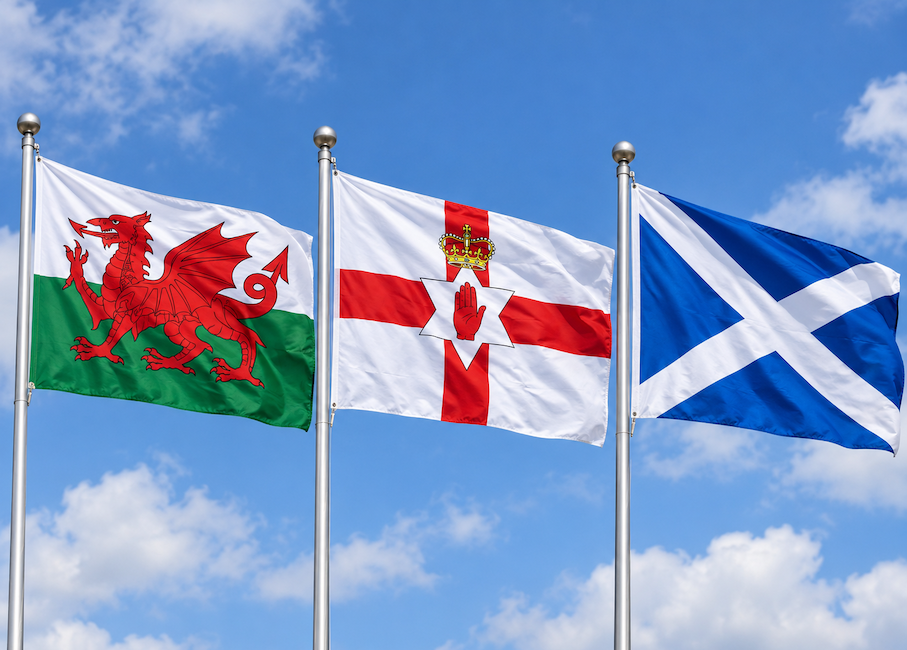
The memorandum commits the parties to cooperation on the economy, international relations and self-determination. It calls on Westminster to “prepare for, plan and facilitate constitutional change” and rejects the idea that any Westminster government should have the right to block democracy or undermine the principle that the people of a nation can decide about their own future. Crucially for us, the leaders of the three nations explicitly recognise that their future belongs in the European Union.
This is more than a symbolic gesture. As we anticipated in our pioneering event in the European Parliament on the 10th anniversary of the Brexit referendum, this insurgent Celtic Alliance reinforces the case that independence from Westminster is not a retreat into isolation but a route back towards European cooperation. More than that, the Cardiff memorandum finally gives political expression to a reality Westminster can no longer disregard: Brexit was imposed against the will of the devolved nations. It must not be their destiny.
The memorandum was followed by an agreement between the Scottish and Welsh governments. The Cardiff Agreement – Cytundeb Caerdydd in Welsh – establishes a framework for cooperation on social policy, economic development, climate change, international engagement and democratic reform. It also addresses the specific constitutional pressures Westminster’s centralising approach places on both nations.
Since Brexit, economic measures agreed democratically in Edinburgh or Cardiff can be constrained by rules imposed from Westminster. Wales and Scotland will now share evidence and expertise to jointly defend and reinforce devolution. Taken together, these agreements recognise that the current UK constitutional settlement is unjust and unsustainable.
These developments are significant from a European perspective also because they demonstrate leadership, optimism and vision at a time when Westminster appears increasingly deprived of all three. Following Starmer’s self-defeating leadership, Andy Burnham’s arrival in Downing Street briefly raised hopes of more democratic, decentralised politics. Instead, his more democratic instincts seem to be trapped within Westminster’s centralist – and increasingly authoritarian – culture.
This was evident in a recent constitutional slip: in response to SNP MP Chris Law, Burnham suggested that Scotland’s situation was the same as Northern Ireland’s, implying that a referendum could happen if independence “appears likely” – as the Good Friday Agreement states for Irish unification. However, given that a majority for Scottish independence had been likely for almost a decade, Burnham quickly backtracked, stating that a referendum was “off-limits”.
The contradiction reveals a tension between an official stance that denies any route for self-determination and the implicit admission that Scotland cannot be left in perennial limbo about its constitutional status. It also demonstrates that Westminster presides over a gray area about what is politically legitimate and constitutionally possible.
It is in this same gray area that Nigel Farage shows how vulnerable British politics is to concentrated private wealth: after triggering a by-election to avoid scrutiny of dodgy financial donations, he has received two further record donations of £36 million each from cryptocurrency billionaires – the largest combined political donations in British history.
It is a stark reminder of the danger posed by a movement built on Brexit, anti-immigration rhetoric and hostility to European cooperation, now backed by resources greater than those available to countless democratic parties and civic movements combined.
For Scotland the constitutional predicament remains unacceptable. A Westminster political system that refuses to recognise Scotland’s democratic mandates while allowing money to flood into populist and centralist forces is not a legitimate custodian of Scotland’s interest nor of that of any other Celtic nation.
The historic Celtic Alliance event in Cardiff cracks open Westminster’s stagnant air, presenting a refreshing antidote: Scotland, Wales and Northern Ireland raising their voices together, as an alliance. We saw a glimpse of that democratic energy when Europe for Scotland and Yes for EU brought Celtic Alliance speakers Philippa Whitford, Jill Evans and Lynn Boylan together with Anthony Barnett at the EU Parliament in June. It was a respectful, constructive dialogue about a future these nations have long been denied a say in.
Europe for Scotland remains committed to the belief that Scotland should have a democratic choice about its future post Brexit and should be welcomed back into the EU if its people so desire. We extend the same solidarity to all Celtic nations and invite Europeans everywhere to express this commitment by signing our open letter.
Long live European solidarity. Long live the Celtic Alliance!