The Scottish and Welsh Parliamentary elections and the English local elections delivered a remarkable streak of historical results that may one day be seen as a turning point for the United (or rather, very disunited) Kingdom and its constituent nations.
In Scotland, the Parliament now has the largest pro-independence majority in Scotland’s democratic history.
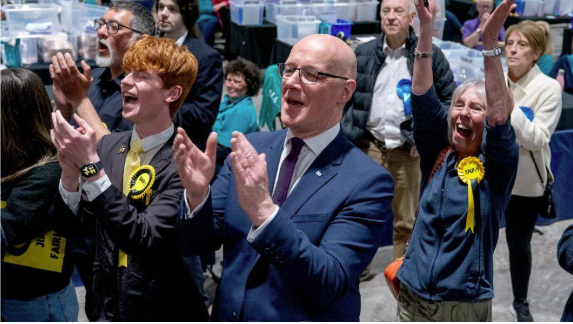
The Scottish First Minister John Swinney celebrating the SNP victory Credit: PA Images
Although the Scottish National Party fell short of winning an outright majority, it was the largest party by a large margin in both the constituency (38.2%) and the (proportional) regional vote (27.4%) and won a plurality of 58 seats, more than all the unionist parties combined. These results mark the fifth consecutive victory of the SNP in the Scottish Parliamentary elections, a remarkable achievement in any democratic polity and a clear sign that for many Scots, the desire for independence is much stronger than what Westminster is willing to acknowledge.
The large pro-independence majority in Parliament is also thanks to the performance of the Green Party, which had their best result in a Holyrood election to date. The Greens, running on a platform promoting an independent Scotland in Europe, secured 15 seats. This was thanks to their highest result ever in the regional vote (14.3%) and their first two historic wins in Glasgow and Edinburgh constituencies.
This largest ever pro-independence majority offers surely a clear and legitimate mandate for a new independence referendum. The fact that the UK government will not even contemplate discussing the issue continues to be a stain on British democracy.
In Wales, the results were even more extraordinary. Ending a dominance which lasted more than a hundred years, the Labour Party was resoundingly defeated, and the elections were won by the pro-independence Welsh party Plaid Cymru, which also advocates for Wales to rejoin the EU as an independent country. Plaid Cymru was the largest party with 43 seats and 35.4% of the vote, with a comfortable margin of 9 seats and 7% points ahead of Reform UK, which arrived second, before Labour.
In these same elections, the Welsh Greens secured their first ever 2 seats in the Welsh Parliament and, like their counterparts in Scotland in the last legislature, they have already offered support to a new government, which will be likely led by Plaid Cymru’s leader Rhun ap Iorwerth. This result, combined with the continuation of John Swinney’s premiership in Scotland and that of Michelle O’Neill’s Sinn Féin vice-presidency in Northern Ireland, will mean that for the first time in the history of devolution, all three devolved administrations will be led by leaders and parties seeking independence from the United Kingdom.
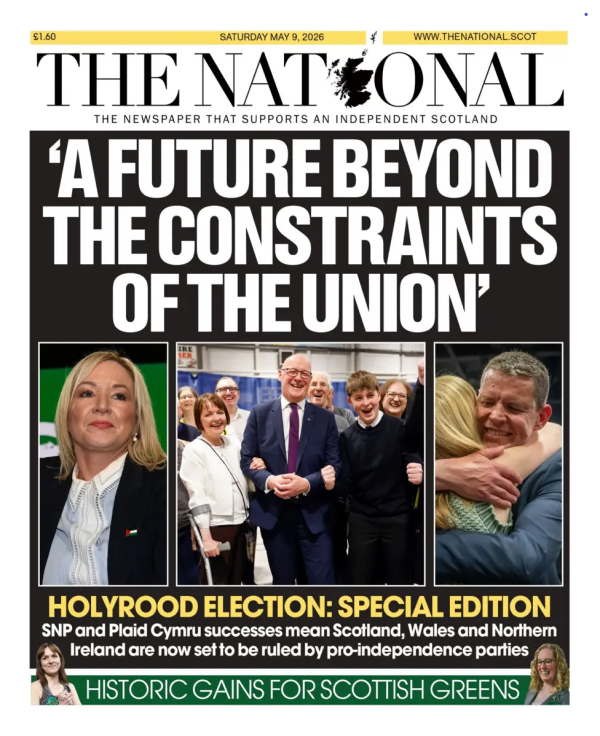
The First Ministers of Northern Ireland and Scotland and the prospective First Minister of Wales. The National
In England too, we witnessed an historical political realignment. For the first time in England’s democratic history, neither Labour nor the Tories received the largest or even the second largest share of votes (they both collected 17%). Most voters instead cast their votes for Reform UK (25%), while the Green Party received the second highest share of votes in their best-ever result in England (18%). The meteoric rise of the Green Party, which doubled its number of councillors and won two mayoral contests in London, offers hope to all those who don’t want to see a Farage government in the UK. Indeed, the sum of Green and Labour councillors was higher than Reform UK, and considering that the pro-European Liberal Democrats also had a very strong night, it’s a clear sign that only a minority of English voters actually want to double down on the self-inflicted mistake that was Brexit.
The results of Farage’s party in England and Wales nonetheless remain a reason for serious concern. Even though these certified a decrease in support compared to last year’s local election, where Reform won 27% in England and 28% in Wales, mostly an expression of the hard core pro-Brexit vote, Farage can still exert a huge role in poisoning the public debate in England and the UK.
A close ally of Trump with historical ties to Putin, Farage was recently found to have received 5 million pounds of dark money, which somehow didn’t lessen his electoral success, not least because much of the conservative UK press chose not to cover the scandal. Farage’s politics seek to divide society and scapegoat migrants: he has threatened to punish parts of the UK that don’t vote for him were he to become Prime Minister.
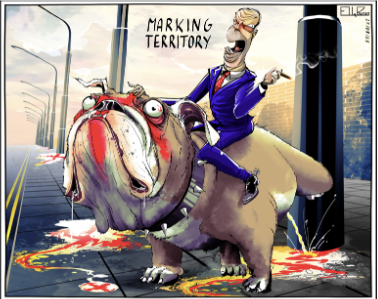
Nigel Farage on a vignette on the Guardian
The electoral threat of Farage underlines the urgency of reforming the UK electoral system based on the unfair first past the post. Not only does this system help perpetuate inequalities, but it is clearly completely dysfunctional for a political system with five or six parties of significant proportions.
Indeed First Minister Swinney himself expressed the need to ringfence the Scottish Parliament from any threat of Reform, which advocates for rolling back devolution and curtailing the power of devolved administrations.
Swinney will again be sworn in as First Minister next week, even as negotiations over the Welsh government could drag for days. Meanwhile, the catastrophic defeat of the Labour Party suggests political instability will continue to be the hallmark of Westminster, with speculations rife on the fate of the historically unpopular Prime Minister Keir Starmer.
We take this opportunity to express our empathy with all those who, in England and elsewhere in the UK, worry about the political crisis and the strength of Reform. By extension, we would like to share with you an announcement which we hope can inspire people in Scotland, Wales and England alike.
We can announce today that our campaign, together with our friends at Yes for EU, will again travel to Brussels this year as part of our Scotland in the EU project.
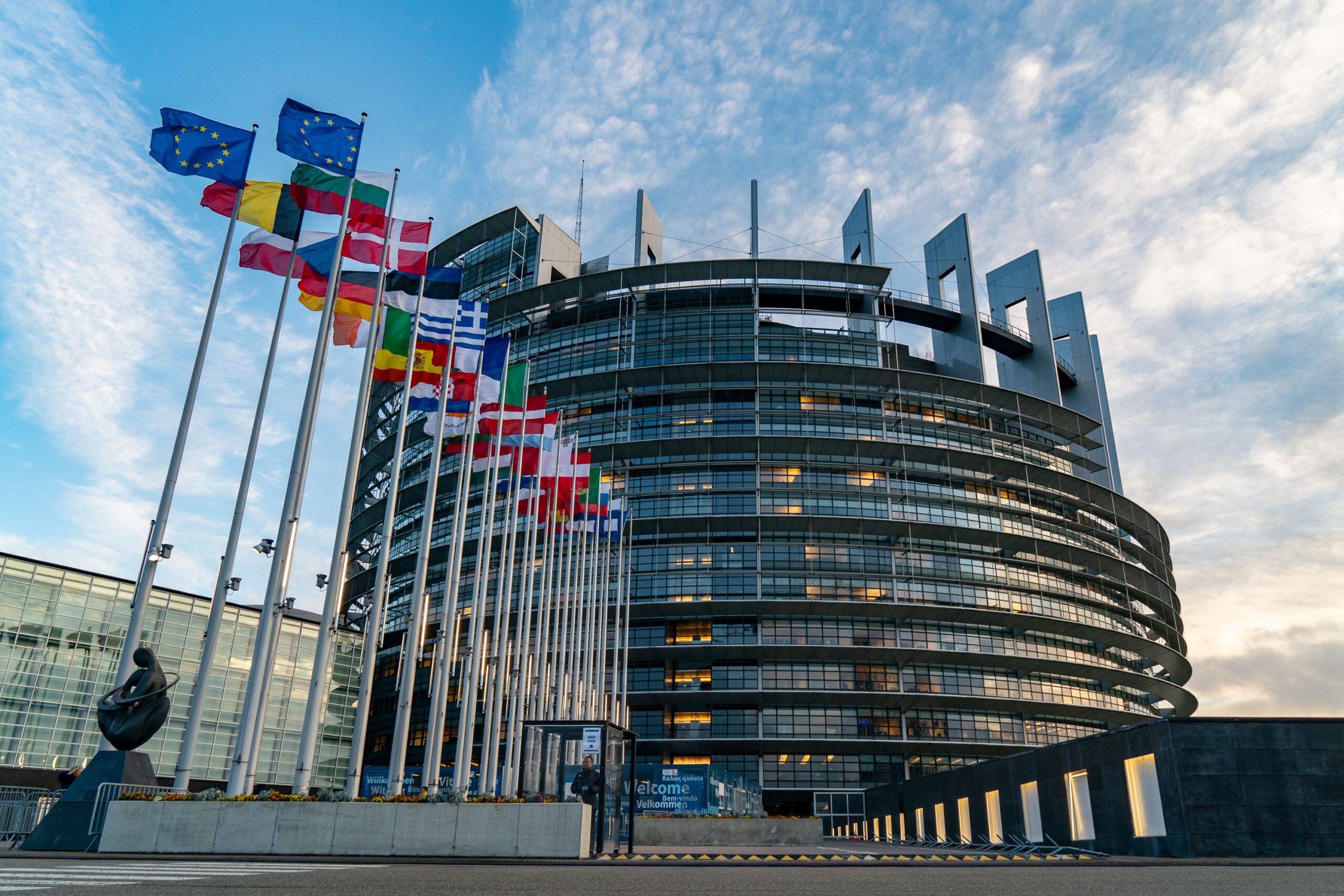
We will be in the EU capitol on the 23rd of June, the 10th anniversary of the Brexit referendum!
What has been a sad anniversary will become a reflection on transcending the constitutional crisis of the UK, and thus a moment of hope. Farage can and must be stopped. Before the next major Brexit anniversary Scotland, Wales might very well claim their independence and rejoin the European family of nations. Indeed, so too might England!
We will chair a roundtable debate in the European Parliament that will feature high-profile speakers from Scotland, England and Wales, as well as MEPs to discuss the implications of the Scottish and Welsh Parliamentary elections of 7 May and the wider constitutional crisis of the UK.
It will be an opportunity to remind MEPs that when it comes to the future of the UK and its place in Europe, Westminster is not the only place to pay attention to. In the wider context of the second Trump administration in the US, most people and nations in the UK are unhappy with how Westminster is run and would like to rejoin the EU. And we remain confident that Scotland and the Scottish people should be leading the way.
If you’re in a position to do so, we’d be very grateful if you could contribute a small donation to cover costs for the organisation of the events in Brussels.